Make it Yours with TUMI personalisation. Discover


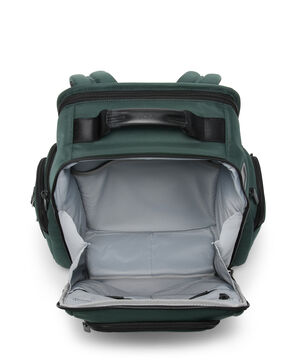
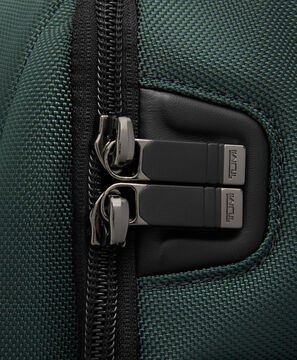


You Might Also Like


What makes a travel backpack different
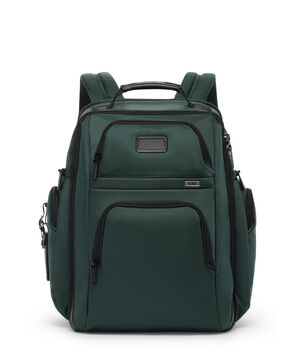
A travel backpack is built for a different job than an everyday one. It has to move through an airport with you, keep the things you need most within reach rather than buried, sit comfortably through a long day of transit, and be sized to travel with you rather than go in the hold. That combination is what separates a travel backpack from a bag that simply happens to have straps.
What to look for
Organisation you can reach
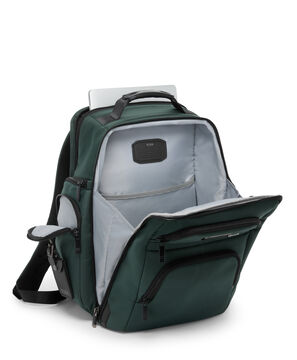
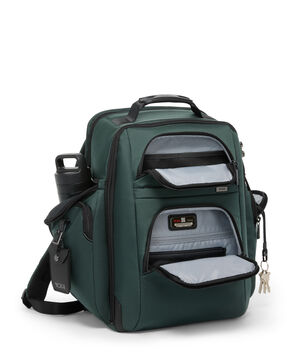
Separate compartments for documents, cables, a passport and a device mean you are not searching through one deep cavity while a queue builds behind you. What matters when travelling is not how much a bag holds but how quickly you can reach the one thing you need.
Capacity that matches the trip
Most travel backpacks are sized to work as a personal item alongside a cabin case, keeping them comfortable underfoot on the plane and easy to carry all day. Selected designs expand, giving you extra volume when you need it and a slimmer profile when you do not, though an expanded bag takes up more room than its standard dimensions suggest. Check the dimensions and capacity on the product page against what you plan to carry, and against your airline's personal item allowance before you fly.
Comfort across a long day
Padded, contoured straps and a supportive back panel matter more than they seem when a bag spends eight hours on your shoulders. Weight distribution is what makes the difference between a bag you carry and one you notice carrying.
Working with your luggage
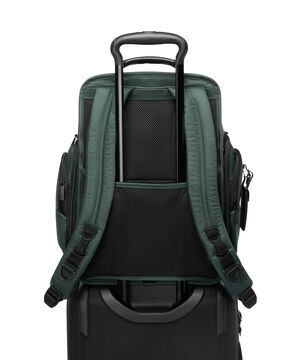
A travel backpack rarely travels alone. Designs that secure to a suitcase handle let you move through an airport with one hand free, which is the practical difference between managing your luggage and wrestling with it.
Travel backpacks for business
Travelling for work asks more of a bag than commuting does. It needs to hold documents flat and presentable after hours in transit, keep your working kit organised while you are away from a desk, and look right walking into a meeting straight from the airport. Brief-style backpacks take this furthest, combining the build of a briefcase with the practicality of two straps, though any structured travel backpack will serve you well. For longer trips, these bags work alongside a cabin case, with the smaller sizes fitting most airlines' personal item allowance.
Choose your material
Material shapes how a backpack wears, how it looks and how it handles weather and daily use.
- FXT Ballistic Nylon backpacks: our most durable fabric, for travellers who are on the move constantly.
- Nylon backpacks: lightweight with a subtle sheen, for a more understated finish.
- Leather backpacks: a premium, durable material that develops character with wear.
Explore the wider TUMI backpack range
If a travel backpack is not quite what you need, these categories cover the alternatives.
- Laptop backpacks for daily commuting and desk-to-desk carrying.
- Sport backpacks for a more casual, utility-led alternative.
- Travel sets for cases, backpacks and accessories combined.
- All backpacks to see the full range in one place.
- Cabin luggage for the wheeled case your backpack travels alongside.
Designed to be kept
A travel backpack is handled constantly: lifted, packed, set down and carried through every stage of a journey. Every TUMI backpack is built for that, and when something does need attention, our repair network services individual components rather than replacing the bag. Register yours with TUMI Tracer and a lost bag has a route back to you.
FAQ
What makes a travel backpack different from a normal backpack?
A travel backpack is designed around the demands of a journey rather than a daily routine. That means organisation that keeps documents, cables and a device separate and reachable when you are standing in a queue rather than sitting at a desk. Capacity is set with cabin allowances in mind, so the bag works as a personal item alongside a suitcase. Many are also built to travel with your luggage rather than beside it, which is not something an everyday backpack needs to do. The difference is less about quality than about what the bag is organised around: a route through an airport instead of a route to the office.
Can I use a travel backpack as hand luggage?
In most cases, yes. Airlines typically allow a personal item that fits under the seat in front of you, alongside a larger cabin bag for the overhead locker. Smaller travel backpacks generally fit that personal item allowance, while larger ones may need to go in the overhead bin instead, so compare the measurements on the product page against your ticket. Some fares include only the personal item, in which case a backpack may be all you can bring into the cabin. Allowances differ between airlines and between fare types on the same airline, so check the maximum dimensions with your carrier before you fly.
What size travel backpack do I need?
Start with how the backpack will be used. If it travels as a second bag alongside a suitcase, a smaller size keeps it comfortable underfoot on the plane and easy to carry all day. If it is your only bag for an overnight or a short trip, choose a larger capacity that can hold a change of clothes as well as your tech. An expandable design covers both situations, staying slim when you need it to and opening up when you do not. Check the laptop compartment size against your device, since that is the constraint people most often overlook.
Which travel backpack is best for business trips?
Look for structure. A backpack that holds its shape keeps documents flat and arrives looking considered rather than crumpled, which matters when you go straight from a flight into a meeting. Brief-style backpacks take this furthest, combining the build of a briefcase with the practicality of two straps, though any structured travel backpack will serve you well. Material affects the impression too: leather reads more formal, while ballistic nylon handles frequent travel better. Think about where the bag will be seen most often, and check that the organisation matches how you actually work when you are away from a desk.
How do I pack a travel backpack well?
Keep the heaviest items closest to your back and low in the bag, which keeps the weight over your hips rather than pulling at your shoulders. Use the dedicated compartments rather than filling one main section, so the bag holds its shape and nothing presses against your laptop. Keep your passport, phone and anything needed at security in an outer pocket you can reach easily. Packing pouches help separate clothing from tech and make unpacking quicker. Finally, pack what you need first at the top, since a backpack is harder to dig through than a case that opens flat.